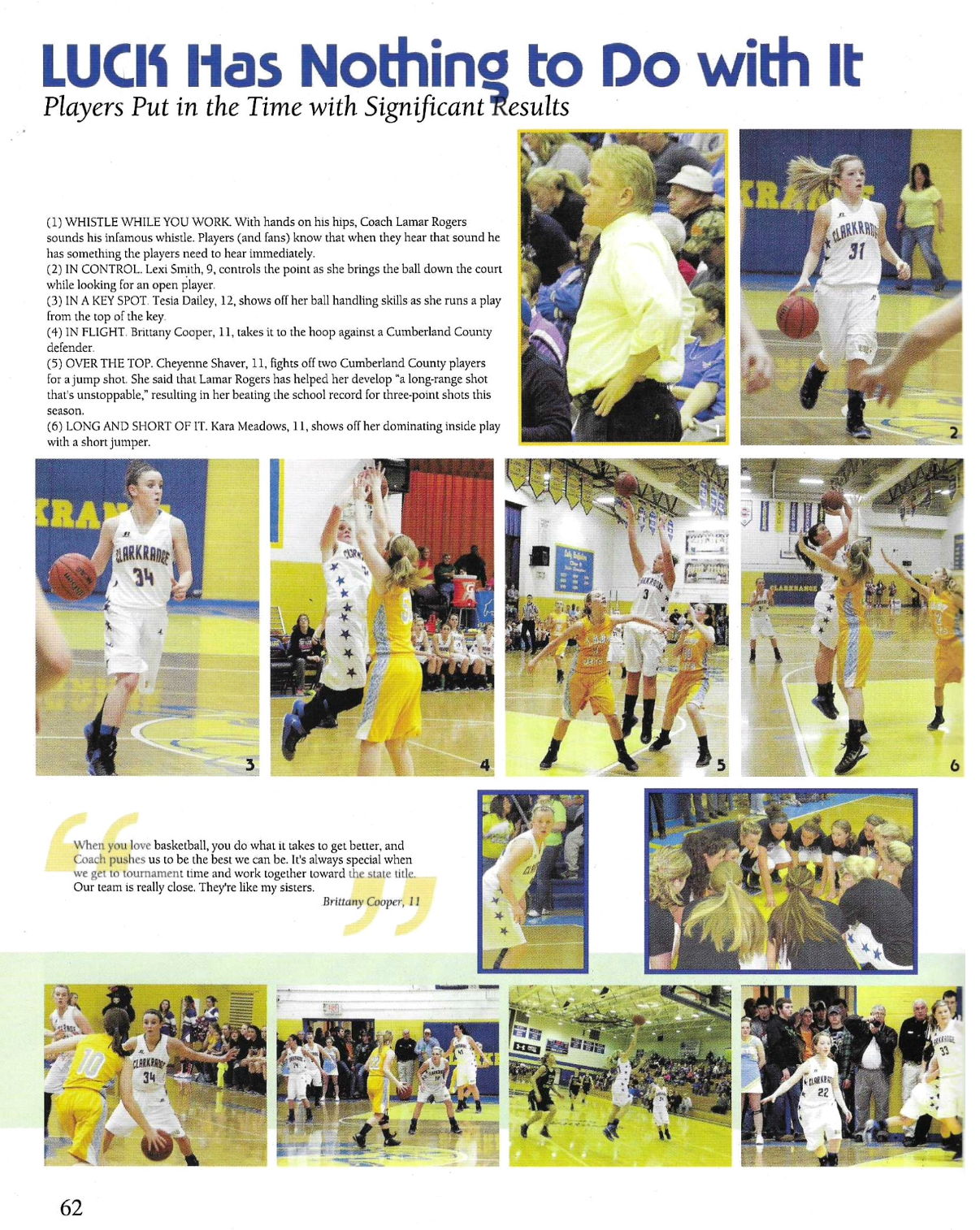
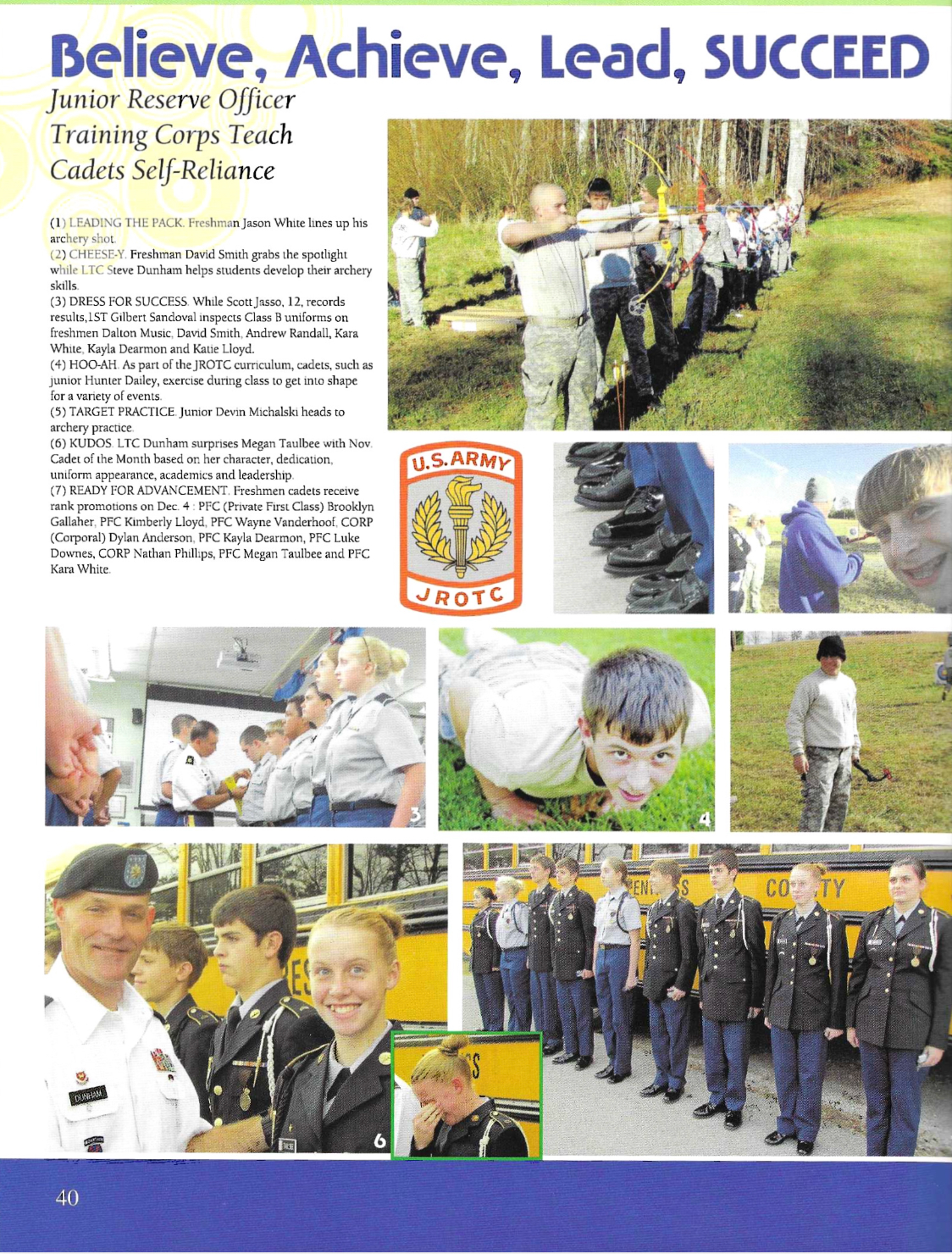
Challenge: Previous editions of The Ranger leaned heavily on posed group shots and offered few captions, so readers had little context for what they were seeing. Photos showed faces but not stories, and years later, few people could say who was pictured or what they were doing. That problem was compounded this year when my student staff was available only during the first semester. I wrote the majority of the book’s copy myself, and I needed every page to hold up on its own for readers who would open the book long after the school year ended.
Solution: I shifted the book toward action photography and detailed, identifying captions. On this JROTC spread, the numbered captions match each photo to its description, so readers can connect every image to the story behind it. Each caption names the students, states their grade or rank, and explains the activity. I included full names and titles so that anyone flipping through the book in the future would know exactly who was pictured and what was happening
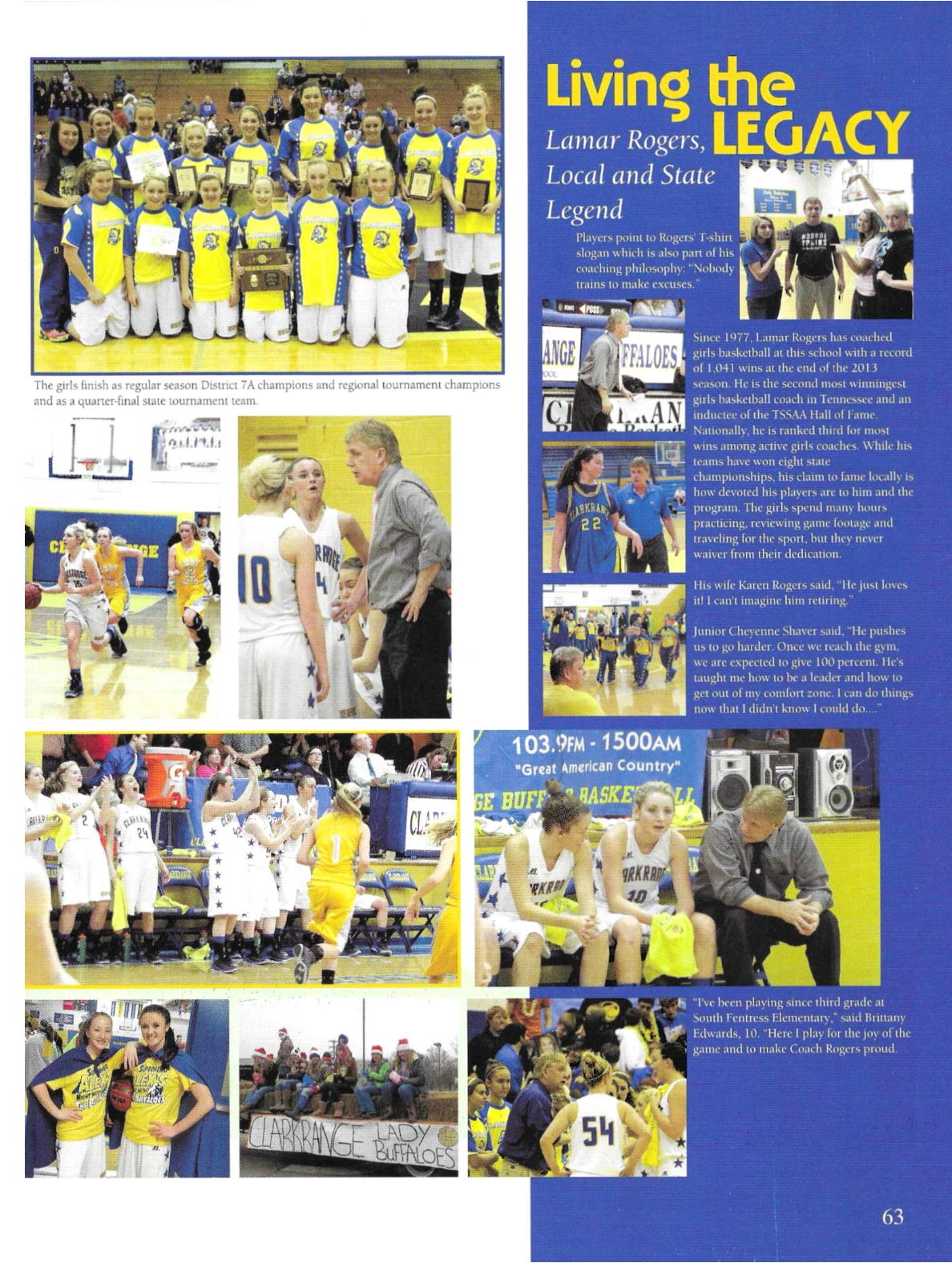
Challenge: For years, the girls basketball coach had insisted that his team’s yearbook coverage follow one format: an individual portrait of each player and one large group photo with a list of names. He was firm about it, and because the coach is a local and state legend, few people were willing to push back. The result was a page that identified players but told readers nothing about the season, the games, or the program. I had to make sure this spread was strong enough to stand on its own without extra help.
Solution: Rather than argue against the coach’s format, I offered him something in return: a sidebar honoring his career and legacy in Tennessee. The sidebar covers his 1,041 wins, his place in the TSSAA Hall of Fame, and the philosophy his players quote back to him, “Nobody trains to make excuses.” By showing that the coverage would celebrate him and the program, I earned his trust and, with it, control of the story. That freedom let me apply the same approach I used across the book. The spread pairs action photography from games with numbered captions that name each player, give her grade, and describe the play.
The coach was extremely complimentary of the finished spread, and several staff members and the principal were surprised that he had agreed to the change. For students, it now preserves the games, the people, and the legacy behind the program in a way that will hold up for years to come.